
Member Knowledge Centre
 member Knowledge centre
The Knowledge Centre provides CHBA members with access to information and resources. It is a growing resource that is currently focused on updating members about national building code information. Please note that this information is a benefit of your membership, and should not be shared beyond your company/organization.
You can browse the items below, filter by category, or enter search terms in the "What are you looking for" box below.
This information is provided by CHBA for informational purposes only and cannot be used as an official or authoritative document.
Understanding AFCIs in Homes

Understanding AFCIs in Homes

Understanding AFCIs in Homes
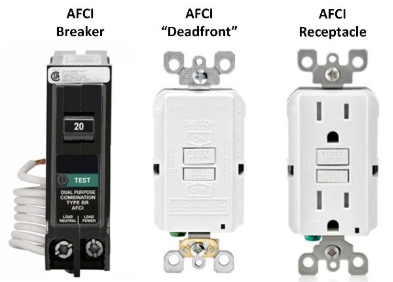 Arc-Fault Circuit Interrupters (AFCIs) are special circuit breakers or outlets designed to reduce the risk of electrical fires. They work by detecting dangerous arcing (sparks) that can occur when wires are damaged or loose. The idea behind AFCIs is simple: catch small electrical faults in the wiring before they become big problems (e.g. fires). In theory, they add a layer of safety, especially in homes with aging wiring. But in new homes, where modern wiring is properly installed and inspected, their benefit is less clear.
What the Electrical Code Says
The Canadian Electrical Code requires AFCIs in most 120V circuits in homes – including bedrooms, living areas, kitchens, and laundry rooms. Some provinces enforce this more strictly than others, so always check with local inspectors. Renovations often trigger the requirement too – something that’s easy to miss when extending or altering older circuits.
The Problem with “Nuisance Tripping”
Many contractors report that AFCIs shut off power even when nothing is wrong, especially when used with common devices like LED lights, vacuums, treadmills, or heat pumps. This is called nuisance tripping. It leads to frustrated homeowners, service call-backs, and – in some cases – people replacing AFCIs with standard circuit breakers, which removes the protection and may create liability for the builder.
Are They Worth It?
AFCIs are expensive – often $800–$1000 more per house in materials – and not all experts agree they’re needed in new builds and in all the circuits. Electrical fires in Canada are already on the decline. Builders and renovators are asking: is the added cost and frustration really worth it?
What Builders and Renovators Need to Know and Do
Know your local code rules – especially for renovations.
Install AFCI-compatible products – some appliances don’t play well with AFCIs.
Document your installations for liability and inspection.
Educate homeowners about what AFCIs are and how to reset them.
Don’t ignore nuisance tripping – report it and help improve products.
Report Nuisance Tripping
If you run into repeated nuisance tripping on a job, report it at the Electro-Federation Canada
For more information, reach out to Bilal.El-Zaylaa@chba.ca
Additional Info
Download File : Tech Essential AFCIs.pdf