Member Knowledge Centre
 member Knowledge centre
The Knowledge Centre provides CHBA members with access to information and resources. It is a growing resource that is currently focused on updating members about national building code information. Please note that this information is a benefit of your membership, and should not be shared beyond your company/organization.
You can browse the items below, filter by category, or enter search terms in the "What are you looking for" box below.
This information is provided by CHBA for informational purposes only and cannot be used as an official or authoritative document.
CHBA Policy Position on Code Changes

CHBA Policy Position on Code Changes
February 25, 2026
 Changes to Canada’s Building Codes
| 
|
The Need for Course Correction in the National Building Codes System
During the last two code development cycles, the national building code process has gotten away from applying good regulatory principles. The accelerated pace and volume of code changes, reduced transparency in decision-making, and the absence of a formal affordability mandate have created undue pressure on housing delivery and construction productivity. This is in part due to the fact that the residential sector is underrepresented in governance and committee structures while new compliance areas are rapidly expanding.
A focused pause on building code changes should be implemented until unresolved issues with 2020 and 2025 codes are addressed and practical guidance is available. That pause would allow decision-makers to restore transparency, complete unresolved technical work, and re-establish a manageable and evidence-based process that supports both affordability and climate outcomes.
--------------------------------------------------------------------------------------------------------------------------------------------------------
Strengthening Residential Representation and Restoring Coherence
With the Standing Committee on Housing and Small Buildings discontinued, residential construction stakeholders have lost a central forum that ensured coordinated and practical solutions for low-rise homes. Work is now spread across more than a dozen committees and over 50 task groups, making meaningful participation for the residential construction industry difficult, which reduces the ability to maintain coherence and language consistency for Part 9.
Meaningful residential representation needs to be restored through a coordinating committee dedicated to the low-rise residential industry sector and through allowing CHBA participation at all meetings of the Canadian Board of Harmonized Construction Codes.
Slowing Down Pace, Volume and Complexity
Building code changes representing significant expansions of scope (such as operational GHG emissions and accessibility for dwelling units) are being implemented at a time when provinces and territories are still in the process of progressing to more ambitious energy efficiency performance levels. The high volume of new compliance areas and the high pace at which these significant subjects are being developed without national training or industry capacity support is not only impeding the federal priority to build 500,000 homes per year, it also leaves unfinished and often unclear provisions to builders and officials to solve in the field further reducing current levels of productivity.
The volume and pace of code changes should be planned and laid out such that it leaves sufficient time for proper review, simplification and resolution of outstanding constructability or affordability concerns by those who are most affected – the residential construction industry, including building officials.
Making Affordability a Formal Objective/Principle
Canada’s housing crisis requires that cost impacts and housing affordability be central considerations in the national building code development system. To this day, the National Model Codes still have no formal housing affordability mandate, and impact analyses do not consistently account for cumulative costs, constructability, regional differences, or the capacity of small businesses. There is no limit how much each code change can add to new houses. CHBA estimates the 2025 code changes may add over $100,000 to the cost of a typical 2,500 ft² home depending on prov. energy targets (see Appendix).
Housing Affordability needs to be embedded as a formal objective or principle into the national code development system requiring full cost and cumulative impact analyses with set limits before major decisions proceed.
Aligning Code Development with Evidence, Not Directives
Recent building code changes have been driven by political mandates rather than technical evidence. Examples include operational GHG requirements, which were approved without any stated benefits and without recognition of known zero-emission technologies such as rooftop solar.
Restore the neutrality of the National Research Council and ensure an arms-length relationship for the Federal Government to model provincial regulation.
--------------------------------------------------------------------------------------------------------------------------------------------------------
Restoring Transparency in the Building Code Development Process
Final decisions are now made behind closed doors, often without due consideration for industry stakeholder concerns and without publishing the rationale from in‑camera or public CBHCC meetings. This does not only apply to approving many technical code changes, it also applies to all policy development decisions and all decisions on code change requests (what committees should and should not work on). Knowing the rationale for these decisions has helped CHBA in the past to better inform the code development process and to inform and communicate the path forward to our members. Worse, the illustrated guide and intent statements for new code changes are not available until 18 to 24 months after code publication, which makes it impossible to quickly communicate and learn the rationale and background for code changes.
Restoring Robust Regulatory Development Principles for All Code Changes
The mandate of the harmonized national construction codes is to establish provisions that reflect the minimum acceptable level of performance for all regions of Canada within the context of the objectives of the codes. The determination of minimum acceptable levels must depend, in large parts, on establishing the costs associated with potential changes to requirements in relation to the benefits generated. Consideration must also be given to industry capacity, product availability, enforcement implications, maintenance costs and other costs that would be handed down to consumers. In short, the development of code changes needs to allow sufficient time for due diligence and to avoid unintended consequences.
CHBA supports changes to the codes where those changes:
- improve performance without compromising housing affordability for Canadians
- provide options for compliance, including prescriptive pathways
- are cost neutral or - if cost is added, the respective benefits exceed them
- are developed with sufficient time for committees to do their due diligence and consult
- resolve only identified issues or gaps, where all other non-regulatory policy options have been exhausted or found unsuitable
- do not expand the scope and application of the codes without a strong policy case supporting it
- are grounded in real life data and experience
- are supported by research that is available well in advance of approving new code requirements
- can be easily understood and interpreted consistently by those responsible for compliance and enforcement
- are supported by industry (by following the above) and are developed in an open and transparent manner.
---------------------------------------------------------------------------------------------------------------------------------------------------------
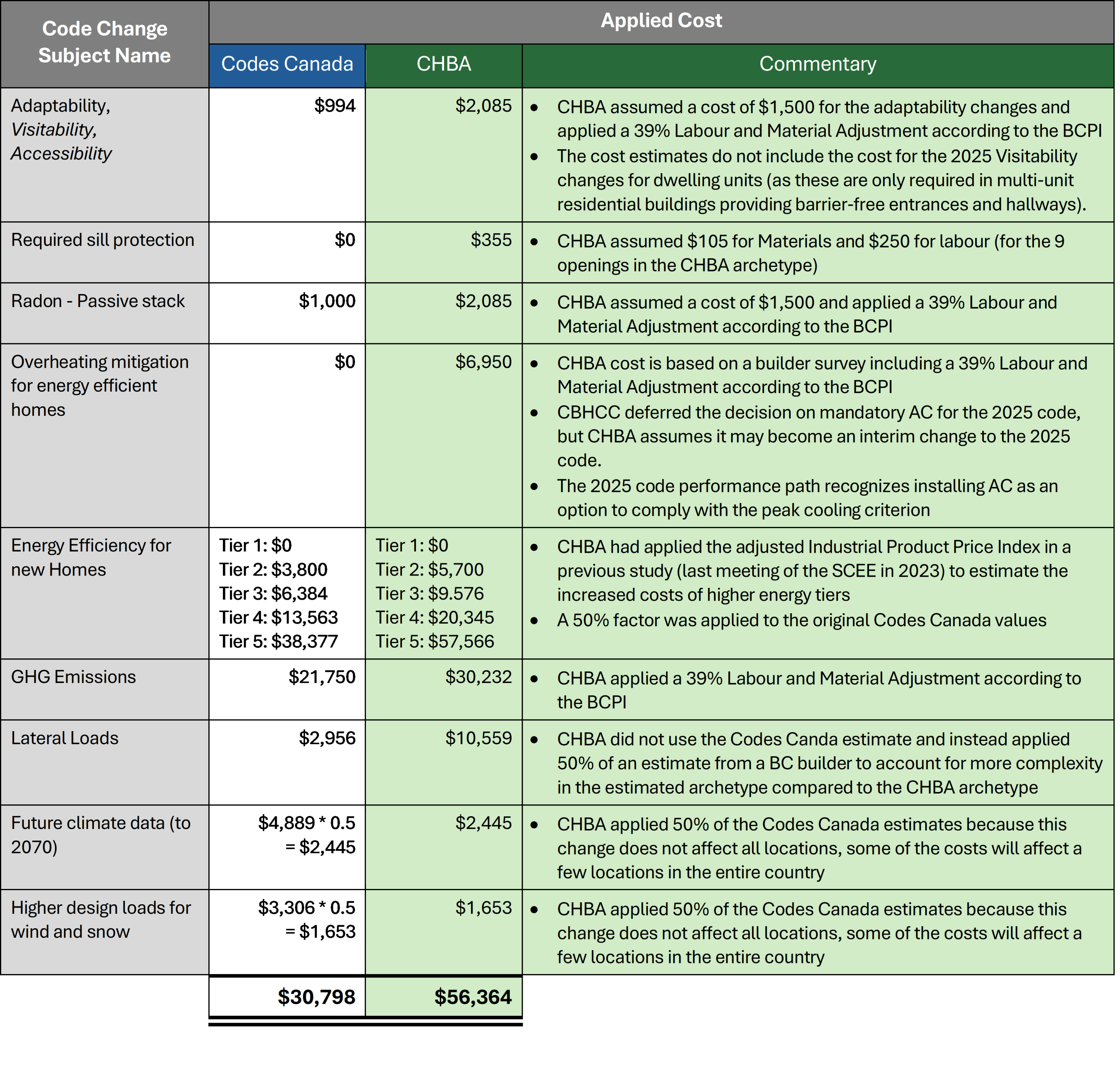
Appendix: Cost Estimates of 2025 Code Changes
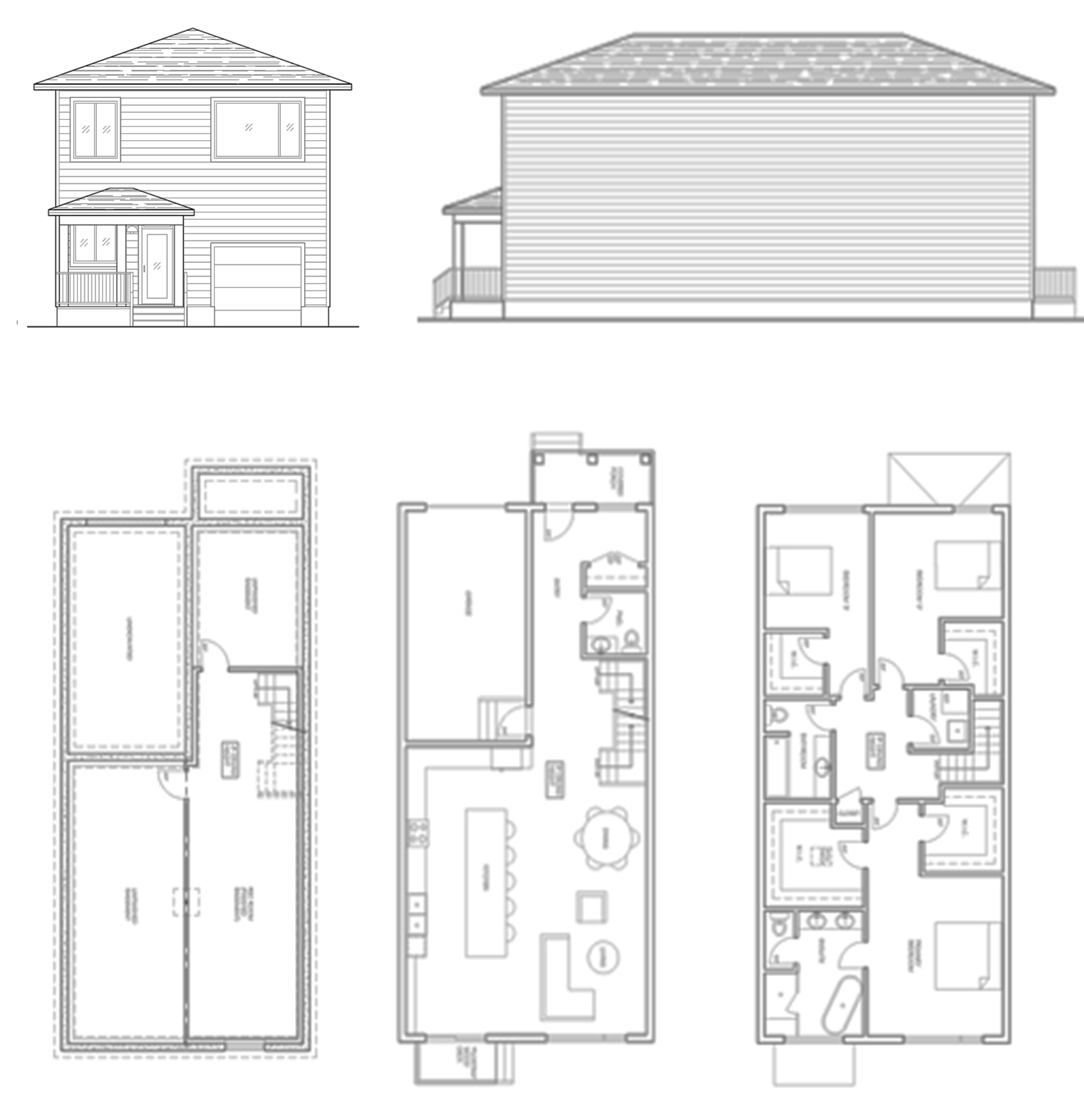
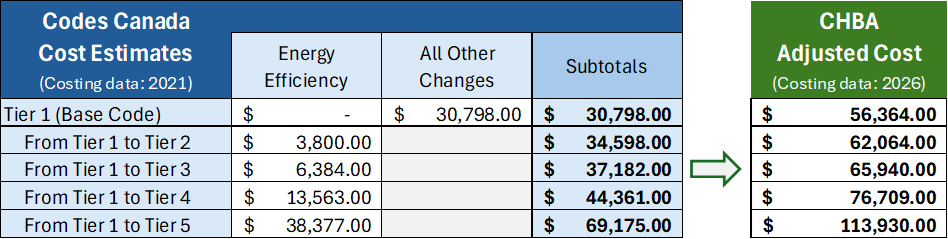 Notes: 1. In some cases, CHBA has adjusted estimates for the archetype’s simplicity or for regional applicability or based on industry feedback. 2. CHBA only applied costs relevant to new construction and did not include any estimates for the changes on alteration to existing buildings (new NBC Part 10). 3. Codes Canada’s cost estimates do not include administrative cost, such as staff training, additional construction time for new trade sequencing nor administrative costs and time for newly created permits and inspections. ------------------------------------------------------------------------------------------------------------------------------------------------------- While estimating cumulative cost is challenging, having real world estimates is critical. It should be noted that CHBA’s cost estimates remain generally conservative. Even estimating cost for a single specific code change varies by the location of the home, the home type/design and by the finishing quality applied. For example, CHBA is hearing from members in British Columbia that engineering costs alone are tens of thousands more dollars than CHBA’s “average” provided below. Despite the challenges, cumulative costing is absolutely necessary when considering the impact of code changes to housing affordability and CHBA has noted for a long time that Codes Canada cost estimates for proposed changes tend to be on the low side, compared to reports from industry; and there has been no assessment by Codes Canada of the full cost of all the cumulative changes in an updated code release. The detailed qualitative estimate and CHBA’s adjustments reflect a reasonably realistic cost estimate for how a single-family home would be affected by the changes in the 2025 codes. Table 2 - Detailed View of Sub-totals for Each 2025 Code Change Subject
|