Welcome to Building Modular News
This e-publication is exclusive CHBA Member content, which will be of interest to those directly engaged in modular construction as well as those looking to add modular or other factory-built elements to their offerings. Interested in learning more or getting involved with factory-built? Check out CHBA’s modular webinar series and follow the Modular Construction Council’s activities.
If there is a colleague in your company or a fellow CHBA member who might find this content interesting, we'd like to help you share it. However, don't just forward this email – that allows other people to unsubscribe you. Instead, please email us with the person's name, company name, and email address and we'll create an account for them and then let them know.
|
In this issue:
- CHBA leveraging funding to help site-builders adopt modular construction
- CHBA’s Winter Issue of Building Excellence Magazine – all about modular
- Federal Government introduces “Productivity Super-Deduction”
- New financing products for modular homes help with cashflow hurdles
- CHBA working to address barriers to modular adoption
- Collaboration key to successful modular development projects
- Grandeur Housing: A modular factory building community
- Unlocking the Potential of Accessory Dwelling Units (ADUs)
- Have your say: Opportunity for modular builders to provide feedback
|
CHBA is leveraging funding to help site-builders adopt modular construction
CHBA is leveraging CMHC ACT Program funding to support builders and renovators to adopt modular construction approaches. CHBA’s initiative, “Transitioning Site-Builders to Modular Construction,” aims to support CMHC’s strategic goals by promoting scalable, innovative housing solutions and increasing productivity and housing output. Volumetric modular construction offers many benefits, but for traditional site-builders and renovators, it’s a complete change in the workflow, timing, financing, and many roles and responsibilities in the construction process, and also faces regulatory, inspection, financing and other hurdles in many cases. Through partnership with industry experts across the country involved in CHBA’s Modular Construction Council, CHBA is creating resources, including new webinars, to support the transition of more site-built builders/developers and renovators to using modular construction. They will include pragmatic information to both encourage and streamline the process of technology adoption, including guidance, tips, and tools on making the move to modular. While these resources will be primarily targeted at builders, developers and renovators, they will also inform municipal and code officials, and serve as educational material for post-secondary institutions as well as professional development for industry players. Look for announcements on the webinars this spring.
|
CHBA’s Winter Issue of Building Excellence Magazine – all about modular
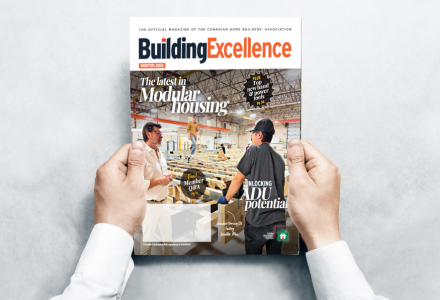
In case you missed it, CHBA’s Winter issue of Building Excellence magazine was entirely dedicated to modular construction. Featuring many members of CHBA’s Modular Construction Council, this issue has a plethora of information for those looking for more information on the opportunities, challenges and barriers (and how CHBA is working to help remove them) with modular construction. Many of the articles in this newsletter have more extensive write-ups in the issue. You can check it out here.
|
Federal Government introduces “Productivity Super-Deduction”
To boost productivity and attract investment, in its fall Federal Budget the government said it’s introducing a “Productivity Super-Deduction”—a set of enhanced tax incentives covering all new capital investment that allows businesses to write off a larger share of the cost of these investments right away. These will make it easier for housing manufacturers to invest, and are in line with CHBA’s Sector Transition Strategy recommendations. Under this measure, companies can recover their investment cost faster through the tax system. This makes it more attractive to invest in machinery, equipment, technology, and other productivity-enhancing assets. However, per CHBA’s recommendations, much more needs to be done to support housing supply at large before factories can afford to invest more in capital assets.
|
New financing products for modular homes help with cashflow hurdles
Lack of access to proper construction financing products for modular construction is one of the major factors preventing greater uptake in Canada. The challenge was one of several flagged by CHBA and its Modular Construction Council in CHBA’s Sector Transition Strategy. In a positive move forward, there are new financial products arriving that can help smooth the cash flow issues, allowing modular builders access to a steady stream of payments prior to and during the production of the modules. CMHC is piloting a performance bond–based insurance program that allows modular rental projects (with 5 or more units) to receive construction loan advances before modules are affixed to foundations, easing capital pressures and enabling access to MLI Select benefits. Meanwhile, for housing for ownership, RBC has expanded its lending products to give pre-approved modular manufacturers staged access to mortgage funds—up to 80% during production—allowing for more cashflow to manage trades, materials, and other business costs. Both organizations presented on their new offerings at the Modular Construction Council meeting in October. Read more details about these new financial products here.
|
CHBA working to address barriers to modular adoption
Modular construction is gaining momentum as builders look for faster, more efficient ways to deliver homes amid severe labour shortages, and federal initiatives look to harness its potential. Yet while factory‑built methods offer quicker timelines, fewer delays, and reduced labour needs, adoption is being slowed and efficiencies lost due to inconsistent codes, duplicative inspections, transportation hurdles, and financing barriers. Canada is not alone in facing these hurdles; while international interest in factory-built homes is rising, the problems we face are common in other countries as well. CHBA’s Modular Construction Council is pushing for solutions through its Sector Transition Strategy, advocating for financial reform, reduced red tape, and better support for bringing workers into the trades and into Canada. Read a more in-depth article on this topic here.
|
Collaboration key to successful modular development projects
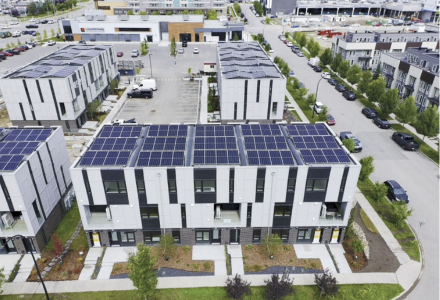
Incorporating factory-built construction requires taking a modular-first approach to design from the outset. For builders and developers looking to incorporate modular solutions to gain efficiencies, collaborating with those who have experience, and with building officials, is key to a successful project. Avalon Master Builder did just that for their new Emerge Seton Towns purpose-built rental project in southeast Calgary. The community features 46 CHBA Net Zero–qualified stacked townhomes, built through a modular‑first approach that required extensive pre‑planning and close collaboration with CHBA members and local officials. Even still, permitting delays impacted timelines, highlighting the important role municipalities play in impacting the efficacies of modular projects. Avalon gained valuable insights for future builds, and President Chris Williams says the company’s shift towards modular development is strategic: “We believe this is the future of construction – the ability to control the variables inside of a factory is the perfect scenario for high performance and durable housing.” Read more about the project here.
|
Grandeur Housing: A modular factory building community
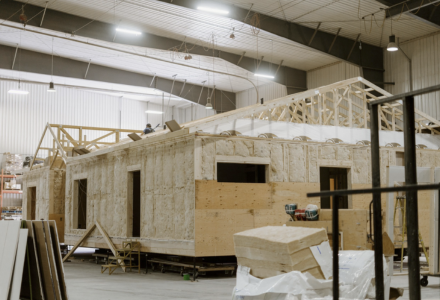
From its 200,000 sq. ft. factory in Winkler, Manitoba, Grandeur builds everything from single-family homes to multi-unit projects, including serving remote northern communities where housing is urgently needed. Their innovative, values-driven approach emphasizes quality, diversity in hiring, and creating real opportunities for workers of all backgrounds. With plans to double production capacity and expand automation, the company is gearing up for an exciting future as it approaches its 50th anniversary. Learn more about this leading factory by reading the full article here.
|
Unlocking the Potential of Accessory Dwelling Units (ADUs)
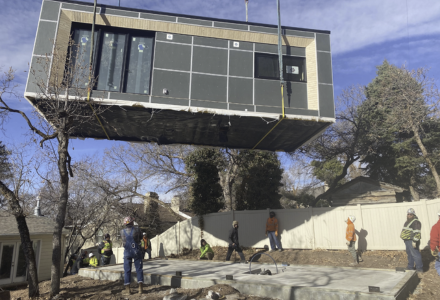
Accessory dwelling units (ADUs) are quickly gaining attention as a possible answer to Canada’s housing challenges, offering flexible, compact spaces for families, renters, and communities. Using off-site construction methods to build them can be an efficient, high-quality, and timely solution for renovators and custom builders, as long as regulatory challenges at the municipal level don’t get in the way. CHBA’s Sector Transition Strategy outlines current barriers and what policies can help harnessing the potential of factory-built construction to address Canada’s housing and affordability crisis. Learn more about how ADUs can be part of the solution from a site-builder and modular factory here.
|
Have your say: Opportunity for modular builders to provide feedback
Two Canadian research teams are calling on modular builders and industry partners to help shape the future of offsite construction through short, targeted surveys.
Concordia University is leading a new phase of research on Mitigation Strategies for Barriers to Modular Offsite Construction (MOC) Adoption. Building on earlier work that identified key barriers facing the sector, the current survey asks manufacturers and production builders to rate a series of mitigation strategies. The survey is brief—taking no more than 5–10 minutes—and consists of 20–25 rating questions. Insights from builders will help the research team understand which strategies are most realistic, most effective, and most aligned with today’s modular industry needs.
Meanwhile, the Offsite Construction Research Centre (OCRC) at the University of New Brunswick is launching a 30-minute survey as part of its project, Understanding and mitigating moisture and physical damage in 3D volumetric modular construction from factory to site. The study focuses on the full lifecycle of a module—from production to transportation, storage, and installation—and aims to identify the practices and conditions most associated with damage. Transporters, contractors, manufacturers, and consultants working in 3D volumetric modular construction are invited to participate. Depending on responses, some participants may later be asked to join a one-hour interview to expand on industry practices, risks, and gaps in current best practice guidance.
To participate in this survey, please email Julia at UNB. Both surveys represent important opportunities for the modular community to directly influence academic research, future best practices, and improvements to industry standards. Modular builders are encouraged to participate and share their firsthand experience to help drive progress across Canada’s off-site construction sector.
|
The Canadian Home Builders' Association
141 Laurier Avenue West, Suite 500
Ottawa, ON K1P 5J3
communications@chba.ca
|
|